
Turkish coffee & tea: the rituals that end (and punctuate) every meal
Rize tea in tulip glasses, cezve coffee on the sand or the flame, UNESCO, fortune-telling, and why baklava wants unsweetened kahve.
· Culture
If meze is how a Turkish table begins, çay and kahve are how it refuses to end. Tea is the daylight ritual: breakfast, the shop, the office, the garage, the grandmother’s sofa, the pause after lunch. Coffee is the ceremonial full stop, or the pause that says the conversation has changed key. Confusing them is the surest way to look like a tourist who read one article. You may drink coffee at breakfast in Istanbul — plenty do — but the national bloodstream is tea.
Çay: Rize, two kettles, no bags
Almost all Turkish tea is grown on the Black Sea around Rize, a steep, wet province that looks more like the Caucasus than like the olive coast. It is a black tea, typically processed as a small, broken leaf, brewed strong in the upper chamber of a çaydanlık while the lower kettle keeps water at a boil for diluting. The glass is the ince belli tulip: you judge strength by color, from tavşan kanı (“rabbit’s blood,” the desired mahogany) to a weak blond that will get you teased. Sugar cubes on the saucer are traditional. Serious tea drinkers use fewer than their grandparents did. Milk is a foreign idea.
Kahve: powder, cezve, foam, fortune
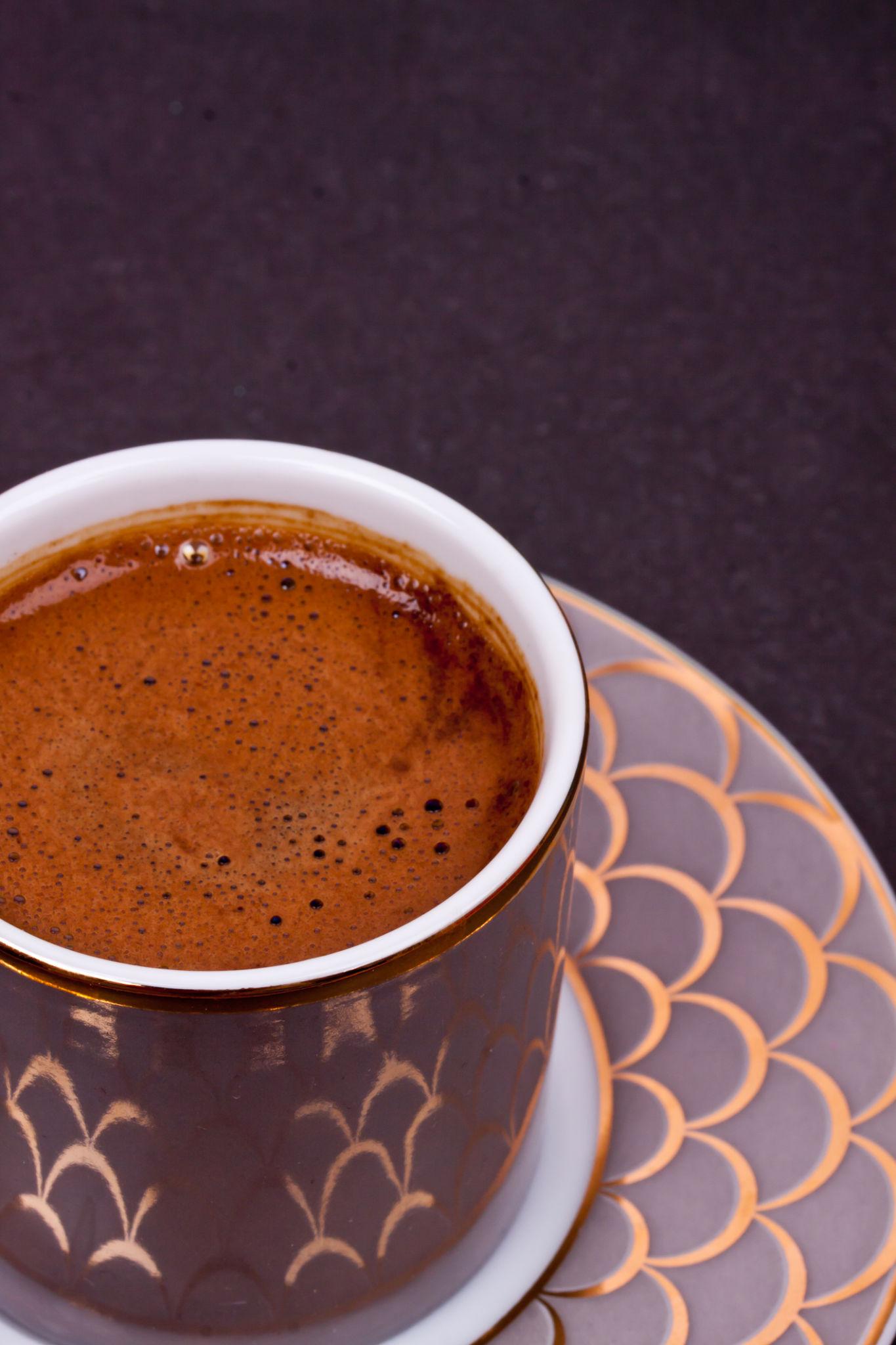
Turkish coffee is not a roast. It is a grind and a method. Beans — often a medium roast — are powdered finer than espresso, mixed with cold water (and sugar, if any, from the start) in a cezve, and brought slowly toward a rise. You do not stir after it climbs. You capture the köpük, the foam, into the cups, then return the pot to the heat for a second rise. The grounds stay in the cup. You sip past them. When you are done, you may invert the cup in the saucer and let a friend read the shapes: a pastime UNESCO was happy to mention when it listed Turkish coffee culture as intangible heritage in 2013. The listing was not about caffeine. It was about the sitting, the water offered first, the proverb that a cup of coffee is remembered for forty years.
Paper-thin baklava, not too sweet, jewelled with Antep pistachios. Paired with unsweetened Turkish coffee — simply perfect.
Sugar in coffee is declared before the brew: sade (none), az (a little), orta (middle), şekerli (sweet). You do not add it after. Asking for a caramel latte is a different religion. Asking for unsweetened coffee after baklava is the correct religion — the pastry has already done the sugar’s work. Tea after baklava is also correct, and more common. Coffee after a heavy grill can feel like a dare; tea is the kinder punctuation. Ayran belongs with the meat, not after the sweet.
At Cappadocia we serve tulip-glass tea and cezve coffee because a sofra that ends with a soda can has skipped its last courtesy. Take the tea even if you think you are “not a tea person.” The first glass is for thirst. The second is for the table. The third is how you tell the kitchen you were happy to stay.
If you make it at home: do not boil Turkish coffee like stew. Heat it as if it might take offence. And for tea, throw away the bag. A small pot, Rize leaves, two minutes of patience, a glass you can see through. That is the ritual. Everything else is a café.
A last hospitality note: in Turkey you are often offered tea before you have asked for anything, including the bill. Refusing once is polite hedging. Refusing twice can read as a closed door. At our table in Agawam, if the meal is over and the baklava crumbs are being counted, say yes to one glass. It costs little and it tells the sofra it was allowed to finish. Coffee, if you want the fortune as well as the full stop, is the slower yes — five minutes of foam and grounds, not a to-go lid.