
Pide vs lahmacun vs Turkish “pizza” — clearing up the confusion
Boat-shaped pide, paper-thin lahmacun, and why neither is pizza: dough, toppings, oven, and how you actually eat them.
· Guides
Calling pide “Turkish pizza” is a useful lie for a first date with the menu and a useless one for anyone who has to bake either. Pizza is a round, typically tomato-sauced, mozzarella-led flatbread from a specific Italian lineage. Pide is a boat. Lahmacun is a film of spiced meat on a disk so thin it eats like a wrap. They share flour, water, yeast, and an oven. That is where the family resemblance should stop.
Pide: a rim, a filling, a boat
Pide dough is a little richer and more bread-like than lahmacun dough, rolled into an oval, edges crimped into a gunwale so the filling cannot escape. The filling is the point: kaşar, minced meat, sucuk, spinach, pastırma, an egg cracked on top in the last minutes (kıymalı yumurtalı). The rim is not crust for dipping; it is structure. You eat pide with a knife, or by tearing from the pointed ends toward the middle. Black Sea pidesi, especially from Trabzon and environs, is a regional literature of its own — thinner, longer, sometimes almost a stuffed baguette of cheese and butter.
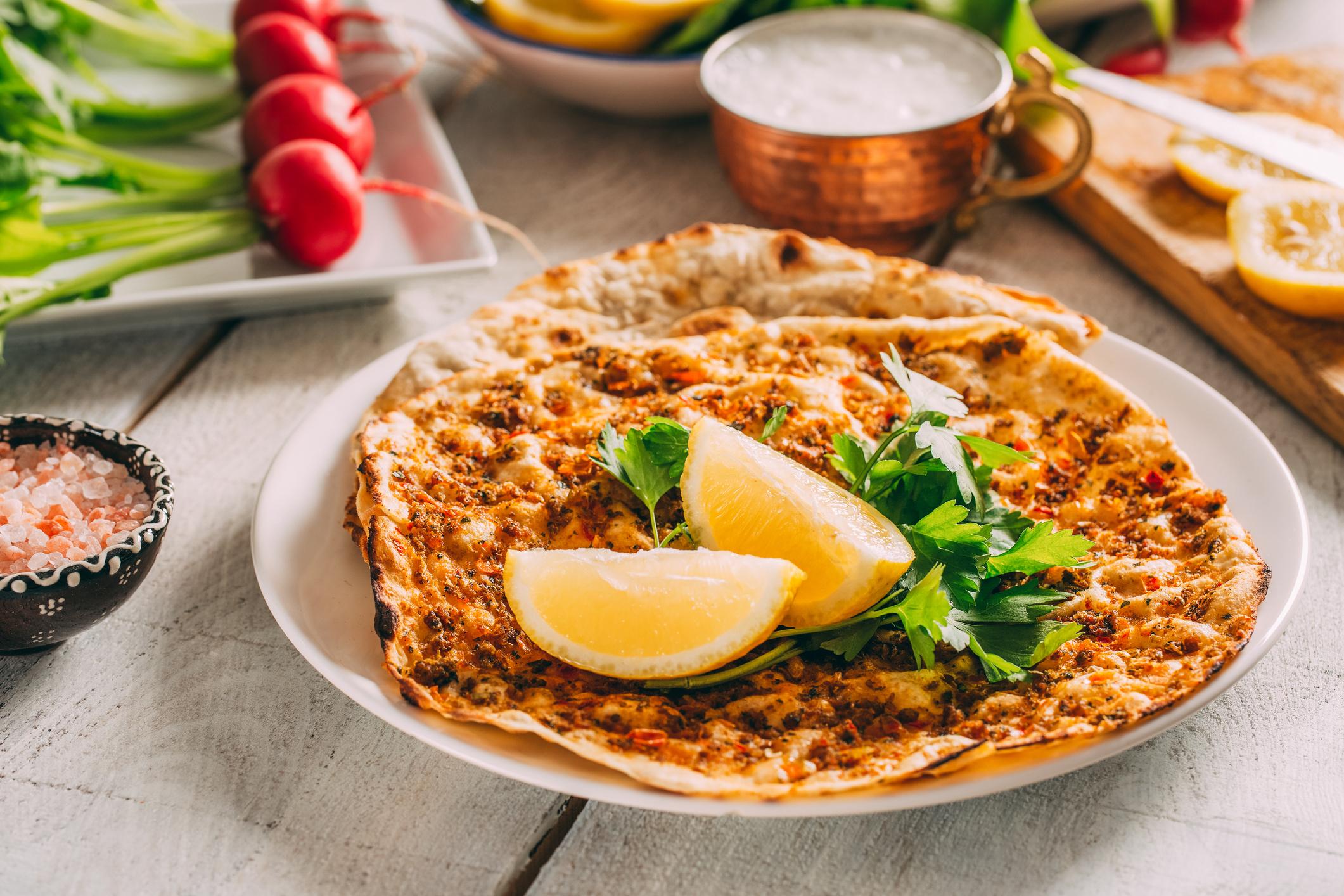
Lahmacun: meat as a smear, not a topping
Lahmacun (from Arabic lahm bi-ajin, “meat with dough”) is a very thin round, the topping a raw mince of lamb or beef with tomato, pepper, onion, parsley, and isot or pul biber, whizzed until it is almost a paste. It must cook fast in a very hot oven so the dough blisters and the meat cooks without steaming into a slurry. You do not cut it into slices. You shower it with parsley and onion, squeeze lemon, roll it, and eat it standing up if you are doing it properly. A stack of four is a meal. A single piece is a snack that insults the baker.
The oven is a stone or steel deck at pizza-like temperatures, but the baker’s motion is different. Pizza is stretched and launched. Lahmacun is rolled thin with a pin, smeared, and sent. Pide is shaped with a seam. If your “Turkish pizza” arrives with a puddle of marinara and a blanket of mozzarella, you have ordered a pizza with cumin. Enjoy it if you like. Do not tell a cook from Gaziantep or Kayseri that it is the same as their lunch.
Pizza is a conversation with tomato and cheese. Pide is a conversation with filling and rim. Lahmacun is a conversation with lemon.
At Cappadocia the pide is a boat you fill — cheese, beef tips, or sucuk — so a guest in Agawam can taste the Black Sea form as a generous boat on the table. The lahmacun comes as a set of four, which is the honest portion. If you are feeding a table, order both: pide as the center, lahmacun as the thing people roll while they argue about Adana. Neither needs ranch. Both need lemon.
A last distinction for the gluten-curious: these doughs are wheat, fermented, and proud of it. There is no authentic cauliflower lahmacun. There is only a different dish. We would rather serve you a salad and a grill than a parody of bread.
Hydration and oven spring are the quiet science. Pide dough is typically a little higher in hydration and oil than a New York pizza dough, and it is not given a long cold ferment as a religion — though a rest helps. Lahmacun dough is drier, rolled thinner, and punished by heat for ninety seconds. If your home oven cannot hit 300°C, use a steel and the broiler, and accept that you are approximating. The lemon and the parsley will still tell the truth.