
Mangal: the art and science of Anatolian charcoal grilling
How a mangal differs from a barbecue: coal type, skewer geometry, distance, rest, and why gas cannot fake the crust of Adana or lamb chops.
· Technique
Mangal is not the Turkish word for barbecue. Barbecue, in the American sense, is a long conversation with smoke and time — brisket, pork shoulder, a closed chamber. A mangal is an open pan or trough of live charcoal, the meat close enough to blister, the cook close enough to sweat. It is the hearth of the ocakbaşı restaurant, where you sit within reach of the coals and the usta turns skewers as if they were a clock. The flavor is radiant heat plus dripping fat that flares and returns as a thin, clean smoke. It is not liquid smoke. It is not a gas flame with a wood chip box.
The coal matters. Oak (meşe) burns steady and hot. Vine prunings (asma) burn faster and perfume the meat with a faint fruit. Cheap briquettes with binders will taste of binders. We want lump charcoal that goes to a white-grey coat, then holds. You cook over embers, not flames. Flame is fuel still arguing with oxygen; ember is heat you can aim. The cook’s job is to keep a gradient: a hotter zone for a crust, a cooler zone to finish a chop without incinerating the tail of fat.
Geometry on the skewer
Shish kebab is a geometry problem. Cubes must be even or the small ones will dry while the large ones stay raw. Chicken wants a marinade that is yogurt or citrus plus pepper, not a sugary glaze that burns before the center is done. Lamb can take less marinade and more salt, because lamb is the point. Adana is a different geometry altogether: a flat, wide skewer that maximizes surface against the coal. If you round Adana into a sausage, you have made köfte by accident.
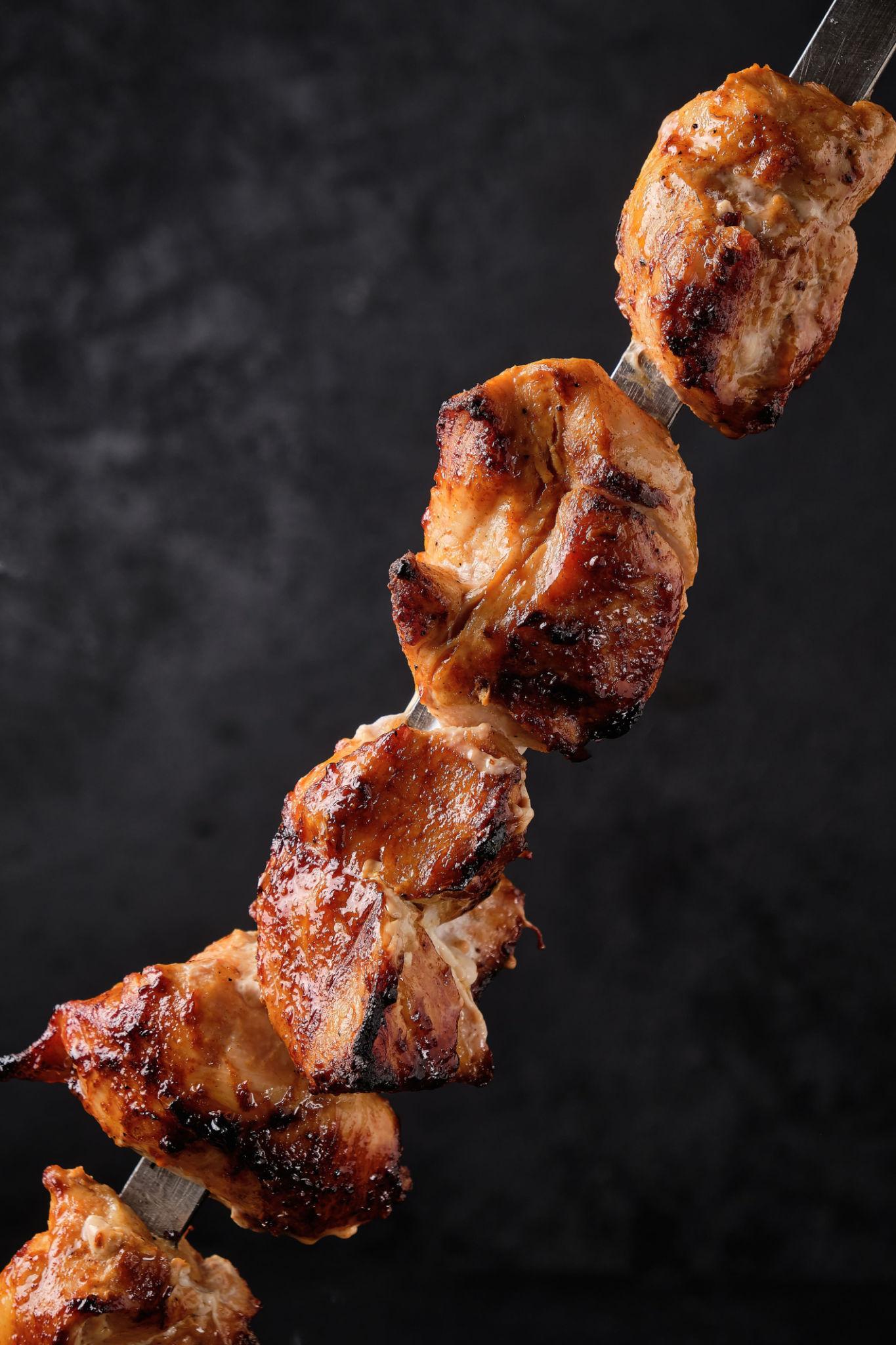
Distance is the other science. Too close and you char the outside while the inside remains a butcher’s shop. Too far and you bake, which is how lamb chops become grey. The rule of thumb on a restaurant mangal is that you should be able to hold your hand above the grate for two or three seconds, not six. Chops want a hard sear, then a rest. Rest is not optional. A chop sliced on the board immediately after the fire will bleed its juice onto the wood instead of back into the meat. Three to five minutes, loosely tented, is not preciousness. It is physics.
Every cut of meat is slow-marinated and kissed by Anatolian charcoal. The mangal has been the heart of this house since the first day.
What we will not do
We will not boil ribs and then “finish” them on the grill. We will not brush Adana with a sticky American barbecue sauce. We will not cook a mix grill as five unrelated items on a cold plate; the platter should still be talking to the fire when it reaches you — tomato blistered, pepper collapsed, rice or bulgur ready to catch the juices. Mix grill is a table centerpiece, not a sampler from a steam table.
If you cook this way at home, use more salt than you think, less marinade than a bottle encourages, and a fire you started thirty minutes before the guests arrive. The mangal is not a switch. It is a temperature you earn. And if the smoke alarm sings, you are probably doing it closer to right than the people who never set one off.
One more kitchen truth: charcoal is a dry heat. Marinades with a lot of sugar or honey will blacken before the center of a chop is done. We keep marinades on yogurt, onion juice, pepper paste, and oil, and we salt in layers. If a skewer flares, we move it — we do not spray water and steam the meat. Fat should kiss the coal and come back as perfume, not as a grease fire. That is the difference between a mangal and a backyard panic. In Agawam we light that pan so the room smells of it before the first skewer lands.