
Lamb, done right: sourcing and grilling in New England
How a Massachusetts mangal treats lamb — chops, Adana, shish — with meat we can buy, inspect, and salt from our Agawam kitchen.
· Technique
New England lamb is not Antep lamb, and pretending otherwise is how restaurants write menus that taste like fiction. We cook in Agawam with meat we can actually buy, inspect, and salt. The animal may have lived in this climate, not on a Central Anatolian steppe. What travels is the method: a mangal of live charcoal, a chop that still has a tail of fat, a mince that was not abused by a warm screw grinder, a rest after the fire so the juice stays in the meat instead of on the board.
Lamb done wrong in America is usually two sins stacked. The first is fear of fat — trimmed until the chop is a grey diet object. The second is a marinade so sweet it blackens before the center is done. Anatolian grilling wants salt, sometimes onion juice or pepper paste, yogurt on chicken more than on lamb, and a coal bed you started long enough ago to be ember, not flame. Flame is an argument. Ember is an instrument.
Chops, shish, and the minced kebab
Baby lamb chops on our menu are frenched enough to eat with your hands and left honest enough to taste like lamb. They want a hard sear, a few minutes of rest, and a plate that still remembers the fire — tomato blistered, pepper collapsed. Shish is geometry: even cubes or the small ones dry. Adana is a different animal altogether, even when it is the same species. Hand-minced lamb with tail fat in flecks, chilli, a flat skewer, a crust. If your Adana looks like a supermarket sausage, someone used a grinder and a gas grill. That can still be dinner. It is not the kebab.
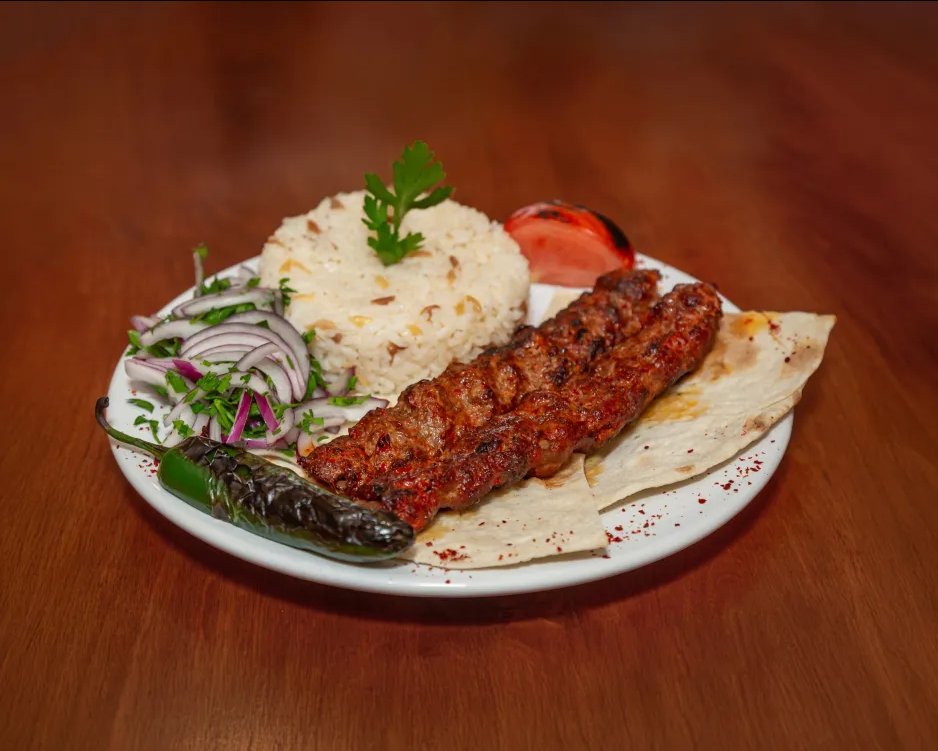
Sourcing, for a restaurant our size, is relationships and inspection, not a poem about a named farm we cannot guarantee every Tuesday. We will not print a pastoral that operations cannot keep. What we can keep is the refusal to boil and “finish,” the refusal to sauce Adana like American barbecue, the refusal to serve a mix grill as five cold items. Massachusetts seasons change. The mangal does not get to become a backup plan in February. Cold air outside makes the dining room smell more of coal, not less.
The pasture can be New England. The fire still has to be Anatolian — ember, salt, rest, and enough fat to baste itself.
What “done right” means on the tongue
It means the chop is not shoe leather and not raw in the bone in a way that suggests the cook panicked. It means Adana juices the bread. It means lamb shish tastes of lamb, not of a bottle. It means you might want ayran, which is salted yogurt, because fat wants acid and salt in a glass. Lemon is allowed. Ketchup is a diplomatic incident. Mint jelly is a rumour from another cuisine; we do not stock it as a personality.
If you cook lamb at home in the Pioneer Valley, use more salt than the internet suggests, less honey than the bottle encourages, and a fire you respect. Start it early. Do not spray water when fat flares — move the meat. Rest it. In Agawam we do that on a restaurant mangal so you do not have to set off your own alarm. Order chops if you want the bone. Order Adana if you want the argument. Order both if the table is four and the night is not in a hurry.
One last kitchen truth: lamb is a smell that divides rooms. We are not a stealth-chicken operation that hides the animal. If you want milder, chicken shish is there and it is not an apology. If you want the house as it was meant, let the lamb announce itself when you open the door from Walnut Street. That announcement is why we light charcoal in a Massachusetts winter. Done right is not a temperature number on an app. It is fat, fire, and the honesty to say which landscape the animal came from.