
Adana vs Urfa: understanding Turkey’s two great kebabs
Hand-minced lamb, tail fat, isot pepper, and the sibling rivalry between Adana kebab and Urfa kebab — what actually changes on the skewer.
· Guides
Adana and Urfa are a hundred and forty kilometers apart on the map and a civilization apart at the table. Both cities sit on the hot, pepper-growing plain of southeastern Anatolia. Both claim the minced lamb kebab as a birthright. Both will tell you the other city does it wrong. The disagreement is not marketing. It is a difference in heat, fat, and whether garlic is allowed anywhere near the meat.
Start with what they share, or the contrast is noise. Traditional Adana and Urfa kebab are not ground on a screw mincer. They are chopped with a zırh — a heavy crescent knife — until the lamb and its tail fat (kuyruk yağı) smear into a paste that will cling to a wide, flat iron skewer. Machine grind warms the meat, smears the proteins, and produces a sausage that weeps on the mangal. Hand-mincing keeps the fat in distinct flecks. Those flecks are what baste the kebab as they render over charcoal.
Adana: red pepper and a hotter hand
Adana kebab is the louder sibling. It takes pul biber — flaked red pepper — and often a mash of sweet red capsicum, sometimes a little isot. The meat is seasoned assertively, pressed onto the skewer in a long, even ribbon, and grilled close enough to the coals that the exterior takes a pepper-dark crust while the interior stays juicy. There is a legal and cultural fight in Turkey over who may even print the word “Adana” on a menu; the city has tried to protect the name the way Champagne did. We call ours Lamb Adana Kebab in the American sense: the style, not a protected appellation. The spirit we keep is hand-minced lamb, chilli, charcoal, no filler.
Urfa: isot, restraint, and no garlic in the mince
Urfa kebab is not “mild Adana.” It is a different seasoning philosophy. Şanlıurfa’s isot biberi is a dark, almost raisin-colored pepper, sun-dried and often worked with salt and oil until it tastes of smoke and dried fruit more than of heat. Urfa kebab uses that depth instead of a blast of red flake. Many usta forbid garlic in the mince — garlic belongs in the salad, or in the onion that is mashed at the table with sumac and parsley (piyaz). The kebab itself should taste of lamb and isot, not of an all-purpose marinade.
If you need a sauce to make minced kebab interesting, the mangal was not hot enough or the fat was not honest.
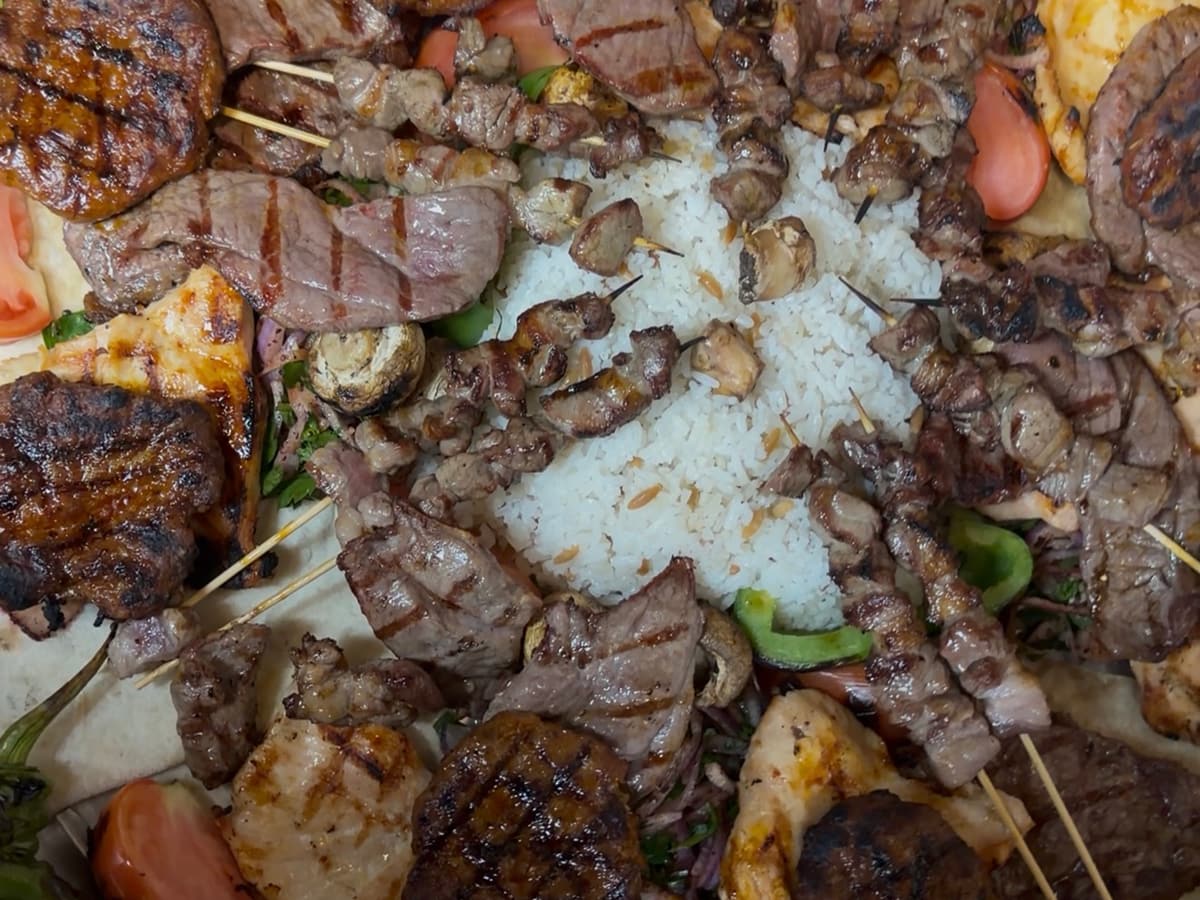
How do you eat them? The same way, which is part of the joke. Warm lavaş or tırnak pidesi, a heap of raw onion with sumac, grilled tomato and pepper, sometimes a knob of roasted eggplant. You wrap, you bite, you chase with ayran or şalgam. Lemon is allowed. Ketchup is a diplomatic incident. At Cappadocia we grill Adana in the Adana manner because that is the kebab New England has learned to love, and because our mangal was built for a crust. If you want the quieter Urfa register, ask — we can hold the heat back and lean on isot. The skewer is the same. The argument is in the pepper.
One last distinction worth keeping: Adana kebab is not döner, not shish, not köfte. Döner is stacked and shaved. Shish is cubes. Köfte is a meatball with more binder and often more onion. Adana is a ribbon of hand-cut lamb that only makes sense over live coal. If it arrives looking like a hamburger on a stick, someone used a grinder and a gas grill. That can still be dinner. It is not the kebab the two cities have been fighting about for a century.
In Agawam the mangal makes the same argument, just closer to I-91 than to the Seyhan. Come for Adana, stay for the pepper debate.